Futures vs Options on NIFTY & BANK NIFTY: Lot Sizes, Margin and Leverage
Intro
When you trade the NIFTY or BANK NIFTY, you’ll often see two popular instruments – futures and options. Both let you take a position on the index, but they behave differently in terms of how much you need to post as margin, how many units (lots) you trade, and what leverage you receive. This article walks through the basics, shows a simple worked example, and explains how the live support-resistance zones on GetMyLevels can help you gauge where the price may spend time.
What it is
Futures are contracts that obligate you to buy or sell the index at a fixed price on a specific expiry date. You pay a margin that is a small percentage of the contract value – this is called the initial margin. The contract size (lot) is usually 75 units of the index. If NIFTY is at 24,000, one future contract represents 75 × 24,000 = 1,800,000 rupees.
Options give you the right, but not the obligation, to buy (call) or sell (put) the index at a chosen strike price. You pay a premium for each option. The lot size for an option contract is typically 75 units as well, but because you only pay the premium, the initial outlay is much smaller than a future. The margin for options is usually the premium itself, but brokers may require a small additional amount for short positions.
Leverage is a comparison of the contract value to the margin required. Futures give higher leverage because the margin is a small fraction of the contract value. Options give lower leverage because the premium is a smaller proportion of the contract value, but the risk exposure can still be large if the option moves deep in-the-money.
Figure below shows a simple price path with a support zone and VWAP.
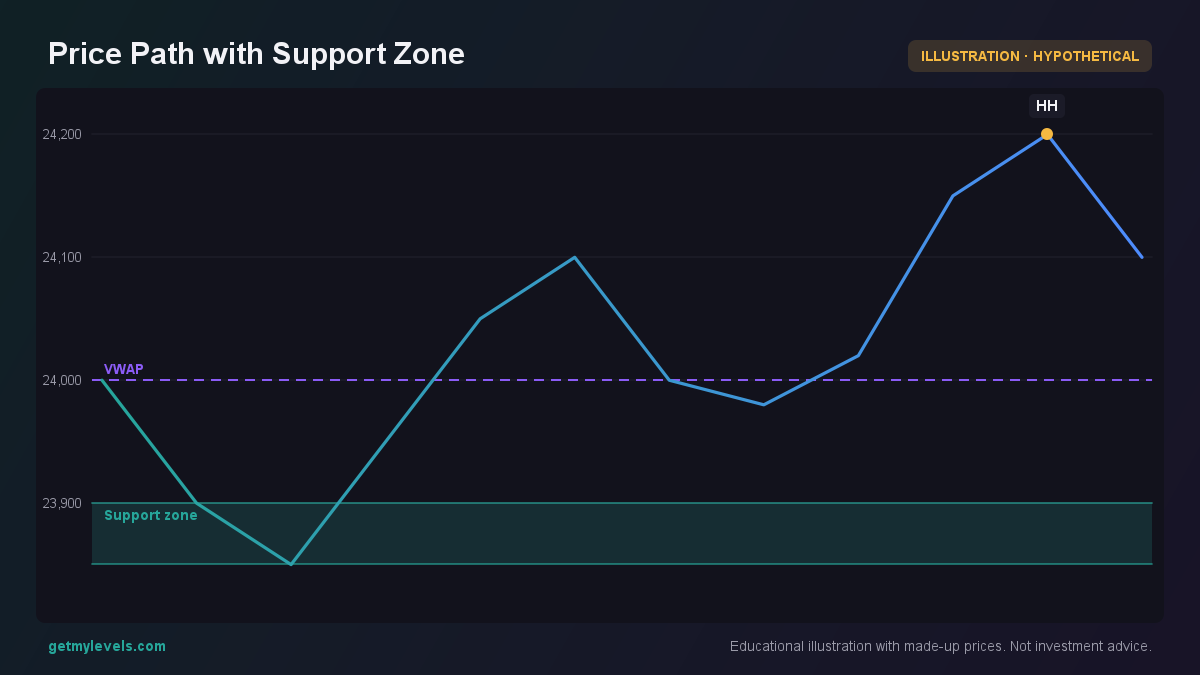 Figure 1: Price touches the support zone and then retraces back up.
How traders read it (worked example)
Suppose you are watching NIFTY, and the index is hovering around 24,000. You want to understand how a future or an option would behave if you entered a position today. Let’s walk through a hypothetical scenario:
-
Future scenario
- Current NIFTY: 24,000
- One future contract: 75 × 24,000 = 1,800,000 rupees
- Initial margin (example): 1.5 % of contract value ≈ 27,000 rupees
- Leverage: 1,800,000 / 27,000 ≈ 66×
-
Option scenario
- Call strike chosen: 24,200
- Premium per contract (example): 200 rupees
- One option contract: 75 × 24,200 = 1,815,000 rupees
- Margin for short call (example): 5 % of contract value ≈ 90,750 rupees
- Leverage: 1,815,000 / 200 ≈ 9,075× (premium-only leverage)
- If the option is sold, the broker may require the margin above.
These numbers are illustrative; the actual margin and lot size are set by the exchange and can change. Traders usually check the latest NSE circulars or broker notifications for the exact figures.
Figure below illustrates a simple option payoff at expiry.
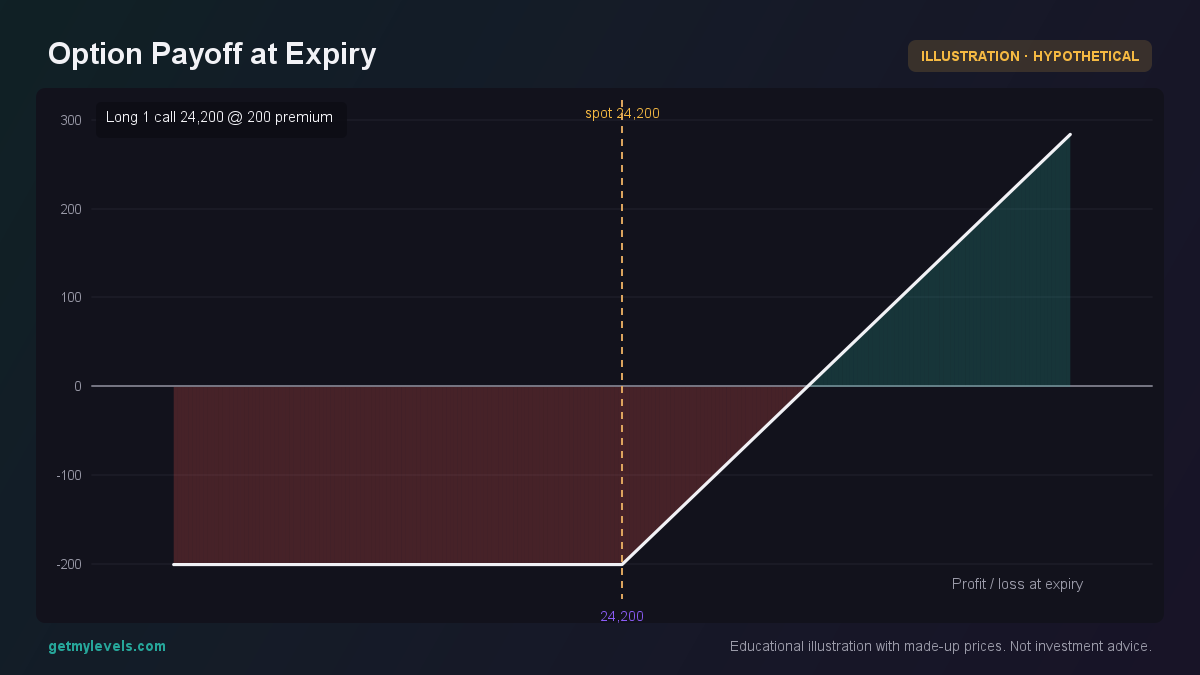 Figure 2: Long call payoff at expiry if NIFTY stays above strike.
The payoff diagram helps you see how the option’s value changes with the index level at expiry. It does not give any buy or sell recommendation.
Common mistakes
| Mistake | Why it matters | What to do instead |
|---|---|---|
| Mixing lot sizes of futures and options | Futures and options use the same nominal lot size (75 units), but the contract value differs. | Always calculate the contract value before deciding on margin. |
| Ignoring margin calls for short options | Brokers may require a higher margin for short option positions to cover potential large losses. | Review the margin policy for each option type before opening a short position. |
| Assuming leverage is the same across instruments | Futures give higher leverage because margin is a small percentage of the contract value, whereas options use the premium. | Compare the leverage ratio, not just the nominal contract size. |
| Using today’s market data in a hypothetical example | Specifying real prices can mislead readers about current conditions. | Label all example numbers as hypothetical and advise readers to check current market data. |
How it fits with support and resistance zones
Support and resistance zones are areas where price has historically found it hard to move beyond. When you combine the knowledge of futures or options with these zones, you get a clearer picture of potential price ranges.
Figure below shows a candle chart with a support zone and a key level highlighted.
If you had a futures position, you would know that a move below that zone could trigger a margin call if the contract value drops significantly. If you had an option, the strike near 24,200 would see its intrinsic value change as the price oscillates around the support.
Figure below shows open-interest (OI) by strike, useful for understanding market sentiment around a level.
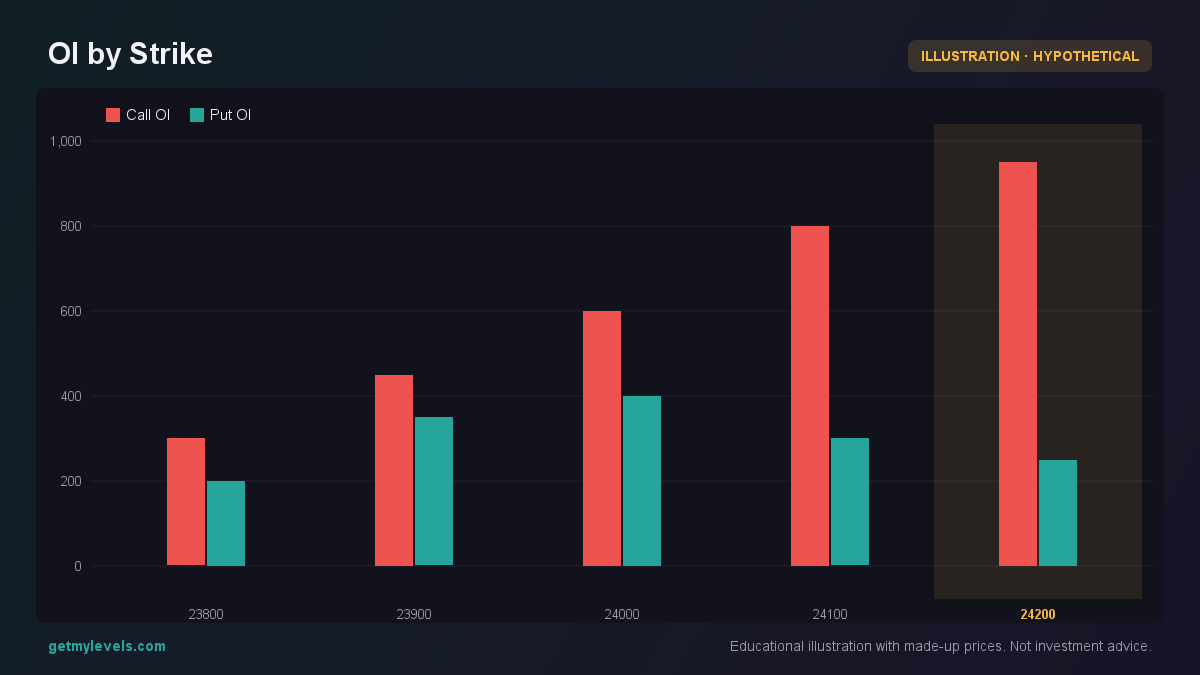 Figure 3: Call OI dominates near the 24,200 strike, indicating bullish sentiment.
A high call OI at a strike level can suggest that many traders are holding positions that benefit if the index moves higher. Combining this with the support zone can give you a sense of how strongly the market is positioned around that level.
Summary
- Futures: single contract size of 75 units, margin typically a small percentage of the contract value, high leverage.
- Options: contract size also 75 units, you pay a premium, margin varies by position type, leverage is premium-based.
- Always calculate contract value before evaluating margin and leverage.
- Support and resistance zones help you identify areas where price may stall or reverse.
- Open-interest distribution across strikes gives insight into market sentiment.
- Use live support/resistance levels on GetMyLevels to see how price interacts with historical zones in real time.
GetMyLevels provides live NIFTY, BANK NIFTY, and SENSEX charts with institutional support/resistance zones, option-chain OI overlays, and alerts. While it does not give trading advice, the live zones can be a useful visual aid when you’re assessing potential price levels for futures or options.
Written by an AI agent from GetMyLevels level data and checked by automated compliance rules. Educational, not investment advice. Not SEBI-registered.