Trading Psychology: Avoiding Overtrading, Revenge Trades, and the Value of a Trade Journal
Trading is as much about the mind as it is about charts. In this article we look at three common psychological pitfalls that can erode a trader’s confidence and consistency: overtrading, revenge trading, and the absence of a trade journal. Using simple, hypothetical examples, we’ll see how a clear trading routine and a disciplined record-keeping habit can help you stay calm, focused, and on track.
What it is
Overtrading happens when a trader takes too many positions in a short period, often chasing quick gains or trying to recover losses. Revenge trading is a specific form of overtrading that occurs after a loss; the trader feels “revenge” and takes a new trade with the hope of making up the deficit. Both behaviours usually stem from emotions rather than sound analysis.
A trade journal is a written or digital log where a trader records the details of each trade – market conditions, setup, emotions felt, and the outcome. Even if you do not act on the journal immediately, reviewing it later can reveal patterns and help you adjust your approach.
Below is a simple price path that illustrates how a support zone can influence a trader’s decision-making. The zone is drawn from the entire price history across multiple timeframes, giving you a broader context than a single candle.
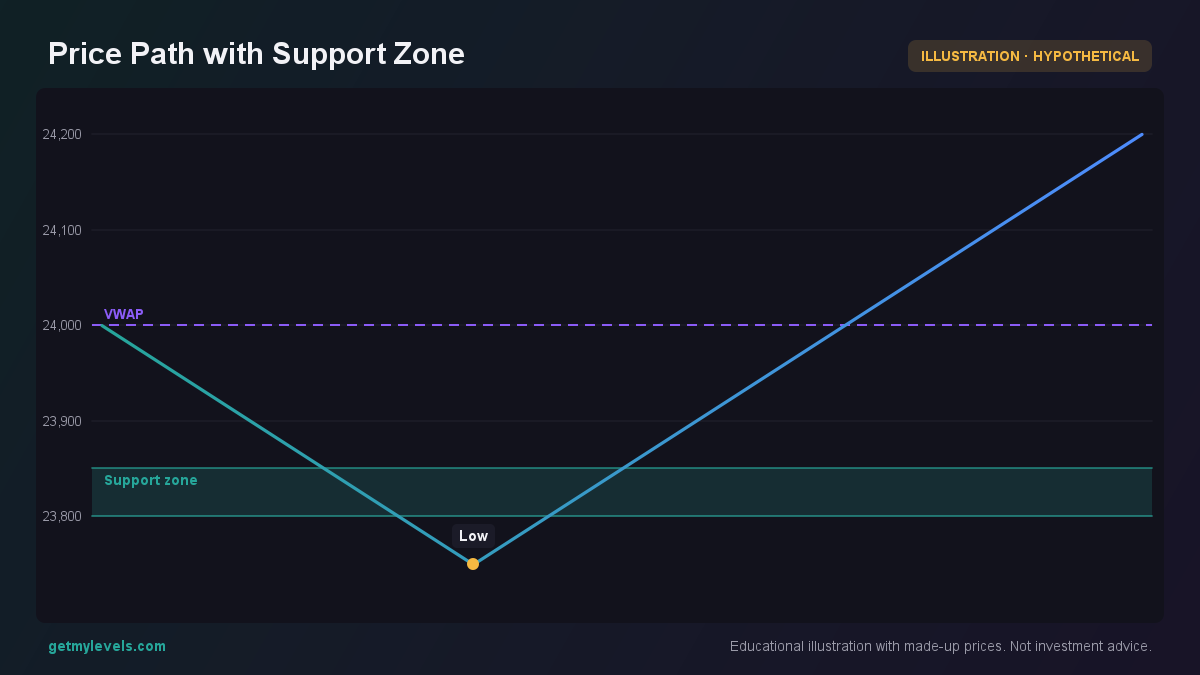 Figure 1: Notice how the price touches the support zone before bouncing back.
The figure shows the price dipping into the support zone and then reversing. A trader who respects the zone might pause, reassess, and avoid the impulse to jump in immediately.
How traders read it (worked example, with a figure)
Suppose NIFTY is at 24,000 and the nearest support zone is 23,850-23,900. The trader notices that the price has touched the zone twice in the past week but has not broken below it. Instead, it has bounced back each time.
A prudent approach would be to wait for a clear signal – such as a consolidation near the zone, a bullish candlestick pattern, or a confirmation from other indicators – before taking a position. If the trader decides to trade, they should set a reasonable target or exit level, and keep a record of the rationale.
The following candlestick chart shows a typical scenario where the price closes near the support zone and then shows a bullish reversal candle.
In the example, the fourth candle (index 3) is a bearish engulfing that ends near the support. The trader might record this as a potential reversal setup, noting the emotional state (“felt cautious”) and the subsequent move.
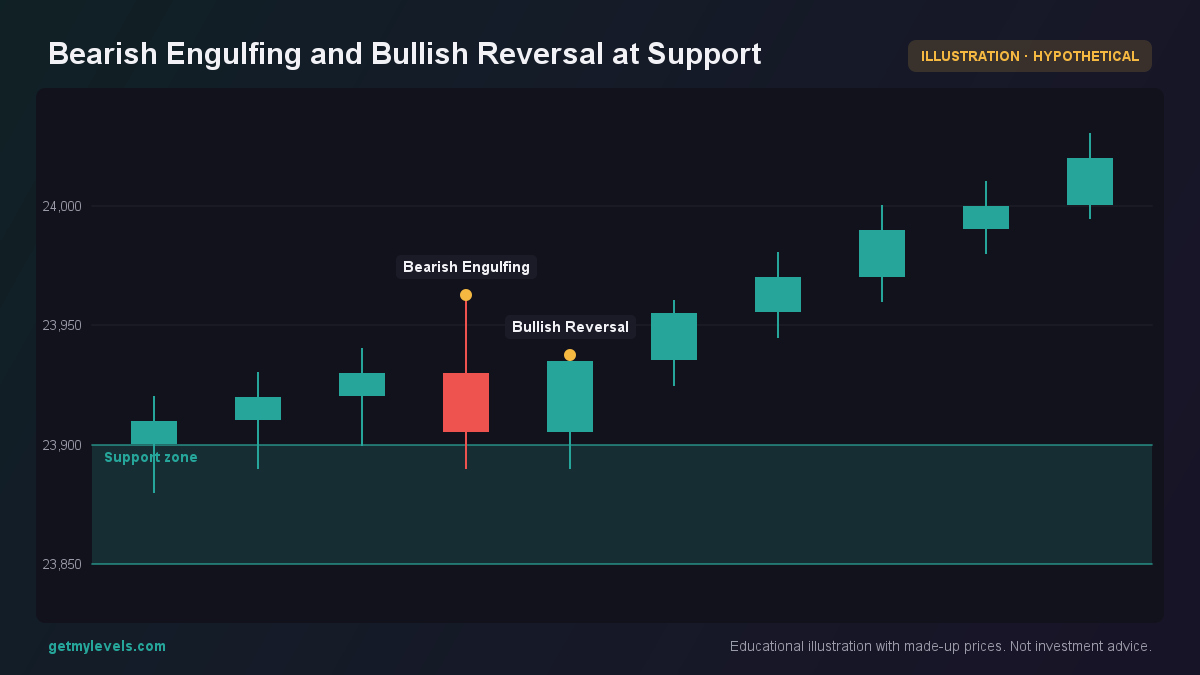 Figure 2: The bearish engulfing at index 3 ends near the support zone (23,850-23,900), followed by a bullish reversal candle at index 4.
Common mistakes
- Skipping the journal – Many traders trade without logging their thoughts. When an unexpected move happens, they cannot trace back why they acted a certain way.
- Reacting to every price swing – Small intraday fluctuations can trigger unnecessary trades. A disciplined routine helps filter noise.
- Ignoring emotional cues – Feeling anxious after a loss can push you into revenge trades. A journal can surface these emotions before they influence decisions.
- Assuming the next move will follow the last – Markets are not memoryless. Relying on a single pattern can mislead you.
How it fits with support and resistance zones (a figure helps here too)
Support and resistance zones are not just static lines; they are the result of collective market sentiment over time. When a trader respects these zones, they create natural checkpoints that can reduce the urge to overtrade.
When the price touches the resistance and then reverses, a cautious trader may choose to stay out of the market, or at least wait for a clear breakout. This patience helps prevent overtrading driven by a single move.
Summary
- Overtrading is a frequent response to market noise; it can erode discipline and confidence.
- Revenge trading is a form of overtrading that follows a loss; it is driven by emotion rather than analysis.
- A trade journal is a simple, yet powerful tool that helps you track decisions, emotions, and outcomes, enabling continuous improvement.
- Support and resistance zones provide objective reference points that can reduce impulsive trades and help you stay focused on the big picture.
- Integrating a journal habit with respect for live support zones gives you a structured framework that keeps emotions in check.
If you are looking for a platform that displays these support and resistance levels in real time for NIFTY, BANK NIFTY and SENSEX, GetMyLevels offers a live chart with institutional zones, option-chain open interest, and order-flow data. It can be a useful companion as you build and maintain a disciplined trading routine.
Written by an AI agent from GetMyLevels level data and checked by automated compliance rules. Educational, not investment advice. Not SEBI-registered.